Insights & Recaps

From the Field: Event Intelligence

Practical thinking on conference management, attendee experience, and the business of events — drawn from our work with partners across the Northeast.

Event Recap · March 2026

Inside the Philadelphia Conference: What Made It Work

When we were approached to manage a three-day, multi-track conference at the Pennsylvania Convention Center, we knew the stakes. The organizing committee had been planning for 14 months, speaker commitments were locked, and expectations from sponsors and attendees were high. Our job was to make sure none of the moving parts collided.

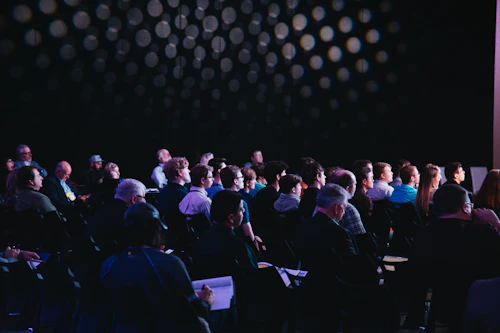
The event drew over 1,200 registered attendees across industries including healthcare, financial services, and education technology. It featured a main-stage keynote track, 18 breakout sessions spread across six concurrent tracks, a vendor expo hall with 45 booths, and a formal gala dinner on the closing evening. Every component required its own production plan, and every plan needed to interlock with the others.

Pre-Event: Building the Foundation

Planning started four months before doors opened. Our first task was a detailed walkthrough of the Convention Center with venue staff, AV vendors, and the client's internal events coordinator. We mapped every room, planned traffic flow between sessions, and identified potential bottlenecks — the escalator bank between the main hall and breakout wing being the most critical.

Registration was built on a tiered system: early-bird, standard, and VIP tracks, each with different access levels. We deployed a custom check-in flow with pre-printed badges and QR codes that fed into a real-time attendance dashboard. By the time the first attendee scanned in, we already had occupancy projections for every breakout room.

Day-Of: Controlled Chaos

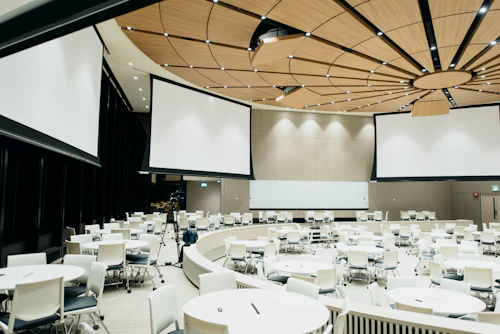
Our on-site team of 22 staff operated from a centralized command post in the venue's back-of-house area. Every room had a captain with a radio, and our stage manager coordinated speaker transitions with 90-second windows between sessions. The keynote stage featured a dual-screen setup with confidence monitors, teleprompters, and a professional streaming rig for remote attendees.

The biggest challenge came on day two when a fire alarm in the adjacent building triggered a precautionary hold. Our team had an evacuation protocol ready, but instead of full evacuation, we coordinated with venue security to hold attendees in the main hall while the situation was assessed. Normal programming resumed within 12 minutes. Post-event surveys showed most attendees didn't even register it as a disruption.

The Result

Post-event metrics were strong across the board. Overall attendee satisfaction scored 98% positive, with breakout sessions and networking opportunities rated as the highest-value components. Sponsor satisfaction was similarly high, with 87% of exhibitors indicating they would return for a future event. The organizing committee called it their most successful conference to date.

For us, the takeaway was reinforcement of what we already believe: flawless events don't happen by accident. They're the product of structured planning, experienced teams, and a client partnership that gives us room to operate. Philadelphia was a proof point, and we're already in early conversations for next year.

Interested? Contact Our Team
Best Practices · February 2026

The Art of the Breakout Session: Designing for Engagement

Ask any conference attendee what they remember most, and it's rarely the keynote. It's the breakout session where they had a real conversation, learned something they could actually use, or connected with someone who changed their perspective. Yet breakout sessions are often treated as afterthoughts in conference planning — slotted into leftover rooms with generic titles and no facilitation strategy.

We've managed hundreds of breakout sessions across dozens of conferences, and the difference between forgettable and transformative comes down to a few deliberate design choices.

Start with Outcomes, Not Topics

The most common mistake is building a breakout agenda around topics rather than outcomes. "Cloud Migration Strategies" is a topic. "Walk away with a 90-day migration checklist you can present to your CTO on Monday" is an outcome. When you anchor on outcomes, everything else — the speaker selection, the room layout, the Q&A format — follows naturally.

We work with conference committees to reframe every session proposal through this lens. It changes the conversation from "who's available to speak" to "what do attendees need to leave with."

Room Configuration Matters More Than You Think

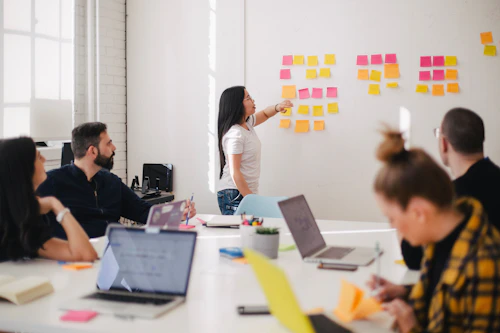
Theater-style seating is the default, and it's the enemy of engagement. For sessions under 40 people, we push for roundtable or U-shape configurations. For larger groups, we use a hybrid setup with a short presentation segment followed by table-level discussion, then a report-back to the room. This requires more room captains, more microphones, and more planning — but the difference in attendee energy is immediately visible.

Facilitate, Don't Just Moderate

A moderator introduces speakers and manages time. A facilitator drives participation, manages group dynamics, and ensures the session achieves its stated outcome. The distinction matters. For high-priority breakout sessions, we recommend dedicated facilitators who are briefed on the audience, the objectives, and the likely friction points. Speakers deliver content; facilitators make sure it lands.

These aren't expensive changes. They're design choices that require intentionality during the planning phase rather than additional budget. And they're the difference between attendees who leave a conference with a stack of business cards and attendees who leave with a plan.

Industry Perspective · January 2026

Why Long-Term Vendor Relationships Beat Competitive Bidding

There's a procurement instinct in most organizations that says: get three quotes, pick the cheapest. For office supplies and fleet vehicles, that instinct serves you well. For event production, it can cost you more than it saves.

We've been working with some of our AV and catering vendors for eight years. Over that time, we've built something that no RFP process can replicate: shared institutional knowledge. Our AV team knows our preferred stage layouts, our mic check protocols, and how we handle last-minute speaker changes. Our caterers know our service timing expectations, our allergy accommodation standards, and how we want a buffet line to flow. That knowledge eliminates re-training, reduces errors, and accelerates setup.

The Hidden Cost of Switching

Every time you switch vendors, you pay an invisible tax. New vendors need orientation. They don't know your brand standards, your team's communication style, or your tolerance for deviations. The first event with a new vendor is always the roughest, even if they're technically excellent. That "roughness" translates directly to attendee experience — a slow bar service, a slightly off lighting cue, a catering transition that takes five minutes too long.

Over a 200-person conference, these micro-failures compound. Individually, none of them are disasters. Collectively, they're the difference between a "good" event and a "great" one.

Building the Relationship

We treat vendor relationships like client relationships. We debrief after every event, share attendee feedback that's relevant to their work, pay on time, and give honest assessments when something needs to improve. In return, we get priority scheduling, better rates without negotiation theater, and a willingness to go above and beyond when the unexpected happens — and in events, the unexpected always happens.

For organizations managing their own vendor relationships, our advice is simple: find vendors whose values match yours, invest in the relationship, and resist the urge to chase marginal savings through constant rebidding. The compounding returns of a strong partnership far outweigh the one-time savings of a cheaper quote.

Ready to Experience the Difference?

Get in touch with our team and explore what working with Hunter & Company looks like.

Contact Our Team